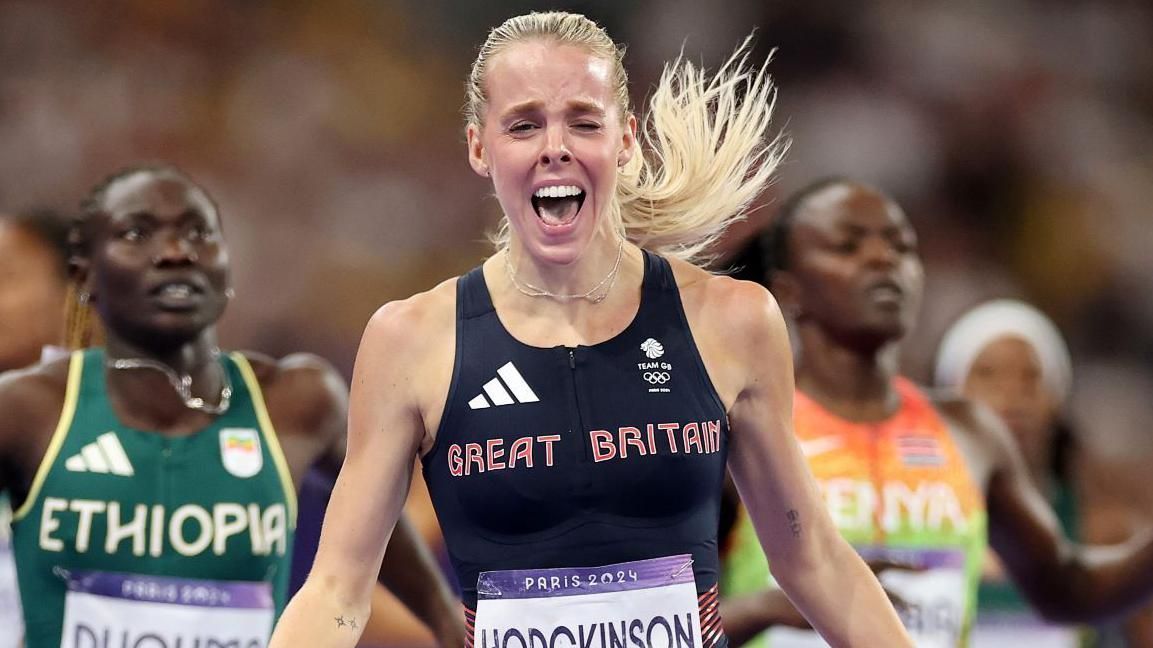
British middle-distance star Keely Hodgkinson is preparing for what could become one of the defining moments in modern athletics after revealing ambitions to attack the women’s 800m world record later this summer.
Hodgkinson is expected to target the historic mark during the London Diamond League meeting in July, with British athletics fans already treating the event as a potential landmark night for the sport.
The record, set in 1983, is widely regarded as one of the most difficult world records in athletics to break. However, Hodgkinson’s form this season has intensified belief that the long-standing mark could finally come under serious threat.
The Olympic champion has already broken the indoor world record this year and recently confirmed she is fully healthy again after previous injury setbacks.
Meanwhile, another major storyline is developing in women’s sprint hurdling.
Nigeria’s Tobi Amusan, the current world record holder in the 100m hurdles, is facing growing pressure after American rival Masai Russell produced a stunning 12.14-second performance in Xiamen just 0.02 seconds outside Amusan’s world record.
The rivalry between both athletes is rapidly becoming one of the sport’s most anticipated battles, with fans and analysts increasingly expecting a record-breaking showdown later this season.
Africa’s growing influence on global athletics also continues accelerating.
Botswana recently hosted the 2026 World Athletics Relays in Gaborone, marking the first time the event has ever been staged on African soil. The successful hosting was viewed as a major milestone for athletics development across the continent.
World Athletics has increasingly expanded its investment in Africa following the rise of Nigerian sprinting, Botswana’s emergence as a sprinting nation, and the continued dominance of Kenya and Ethiopia in distance events.
The overall atmosphere surrounding African athletics has shifted significantly, with growing sponsorship interest, increased global visibility and more elite-level competitions now taking place on the continent.
Off the track, Michael Johnson’s Grand Slam Track project is attracting intense debate across the athletics world.
The new league has reportedly encountered financial difficulties, with questions emerging over athlete payments and the long-term sustainability of the project. Reports suggest World Athletics may withhold support for future events until outstanding issues are resolved.
While some athletes and fans still believe the concept could modernize athletics, others argue that the established Diamond League structure already provides the sport’s strongest competitive platform.
Elsewhere, Swedish-American pole vault star Armand “Mondo” Duplantis continues to dominate global attention in field events.
Duplantis opened his Diamond League season in China and remains athletics’ most consistent attraction outside sprinting. Every appearance now carries expectations of meet records, stadium records or even another world record attempt.
The Diamond League season itself is rapidly building momentum as the calendar moves through Rabat, Rome, Stockholm, Oslo, Paris and London.
The Rabat meeting is attracting particular attention due to expected large crowds and growing enthusiasm for elite athletics across Africa.
At the same time, athletics is undergoing one of the biggest structural changes in its modern history.
World Athletics is preparing to launch the new “Ultimate Championship,” an elite event featuring massive prize money with winners potentially earning around $150,000 each.
The competition represents part of a wider push to make athletics more commercially attractive, globally marketable and financially rewarding for athletes.
Two debates now dominate global athletics conversations:
Can Keely Hodgkinson finally break one of track and field’s oldest world records?
And is women’s sprint hurdling entering its greatest era yet through the rivalry between Tobi Amusan and Masai Russell?