
The tennis world is entering one of its strangest and most unpredictable periods in years.
Veteran legends are confronting questions about longevity, younger stars are accelerating toward the top of the sport, and emotional volatility is once again becoming part of the weekly drama on tour.
And somehow, as always, Daniil Medvedev has found himself right in the middle of the chaos.
Medvedev’s Clay-Court Frustration Explodes Again
Another tournament on clay, another emotional eruption from Medvedev.
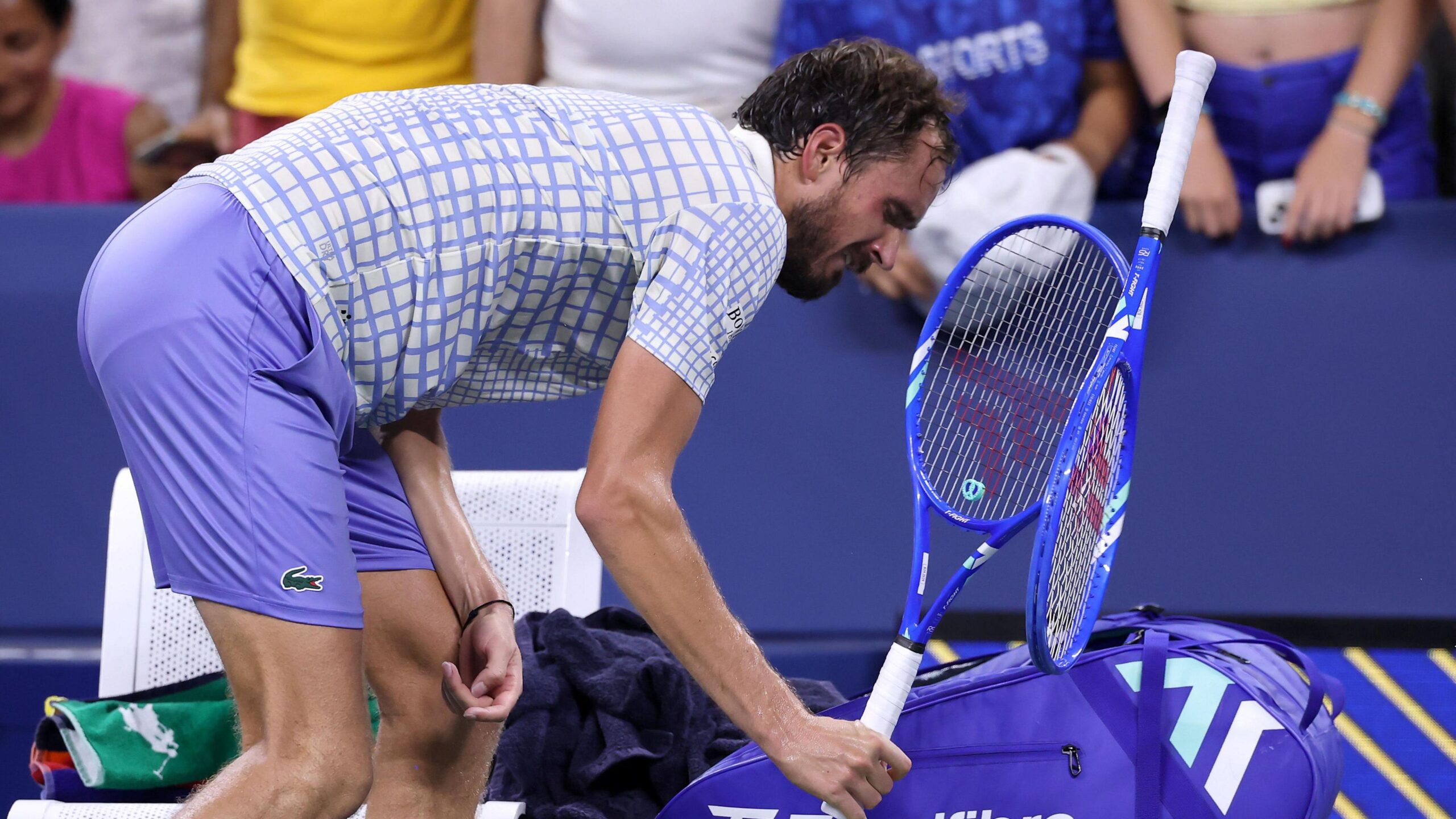
Following a frustrating defeat in Rome, the Russian star smashed his racket, argued repeatedly with the chair umpire and sarcastically applauded sections of the crowd instantly sending tennis social media into meme overload once again.
The irony is that Medvedev himself only fueled the jokes further afterward, admitting during his press conference that clay “still feels like a punishment.”
But beneath the entertainment value, there is growing concern around his form heading into French Open.
His movement appears uncertain, confidence looks fragile and his discomfort on slower surfaces continues to create tactical problems against elite opponents.
For a player capable of beating almost anyone on hard courts, the psychological battle with clay remains one of the strangest ongoing storylines in modern tennis.
Djokovic’s Future Is Becoming Tennis’ Biggest Conversation
At the same time, discussions surrounding Novak Djokovic are becoming louder with every passing tournament.
The signs are subtle but impossible to ignore:
- lighter scheduling,
- more skipped events,
- and increasing comments from younger players suggesting the aura of invincibility around Djokovic may finally be weakening.
Yet despite all the speculation, one reality still dominates the locker room:
Nobody wants to face him in a Grand Slam.
Players repeatedly acknowledge that Djokovic remains uniquely dangerous because he can appear vulnerable for weeks only to suddenly elevate himself to an almost untouchable level at major tournaments.
That psychological fear factor still exists, even if the physical dominance is no longer quite as overwhelming as before.
The larger question now is whether tennis is slowly approaching the beginning of the true post-Big Three era.
Naomi Osaka’s Slow Revival Is Winning Fans Again
One of the most encouraging stories on the women’s tour belongs to Naomi Osaka.
She is not fully back at championship level yet but the progress is becoming increasingly visible.
Observers have noted:
- sharper movement,
- improved confidence,
- and far more positive body language compared to earlier stages of her comeback.
Beyond the court, Osaka continues to thrive as one of sport’s most influential crossover personalities, balancing tennis with fashion, branding and cultural relevance in a way very few athletes can match.
There is now growing belief that another deep Grand Slam run may not be far away.
And if Osaka regains consistent form, the entire WTA landscape changes dramatically.
Jack Draper Is Emerging as Britain’s Next Big Hope
Jack Draper is rapidly becoming one of the most discussed players in men’s tennis.
His power, athleticism and left-handed aggression are drawing increasing praise across the tour, with many analysts convinced that his ceiling is genuinely elite if injuries stop interrupting his development.
The comparisons with former British icon Andy Murray are already beginning to grow louder in British media.
Players themselves have also spoken openly about how difficult Draper is to face physically, especially when he is fully fit and confident.
For Britain, the timing feels symbolic:
as Murray approaches the end, Draper appears ready to lead the next generation.
Murray’s Farewell Tour Is Becoming Emotional
Speaking of Murray, every appearance now carries the atmosphere of a goodbye.
Crowds across tournaments have increasingly responded to him with standing ovations, while fellow professionals continue publicly praising his influence on modern tennis.
The emotional shift around Murray is becoming obvious.
Even rival fanbases now seem more focused on appreciating his legacy than supporting against him a clear sign that retirement conversations are entering a more serious stage.
Few players in recent history have earned as much respect for resilience, determination and competitive spirit.
And tennis understands that once Murray leaves, an entire era officially disappears with him.
Saudi Arabia’s Expanding Tennis Influence Is Dividing the Sport
Away from the court, one of tennis’ biggest debates revolves around Saudi Arabia’s rapidly growing involvement in the sport.
Saudi-backed investment is increasingly shaping:
- exhibition events,
- sponsorship deals,
- commercial partnerships,
- and long-term tournament expansion discussions.
Some players have fully embraced the financial opportunities and global exposure.
Others remain uncomfortable with the direction the sport may be heading ethically and politically.
The division among fans is equally intense.
Supporters argue the investment could modernize tennis commercially and increase player earnings, while critics fear the sport risks becoming overly dependent on geopolitical influence and entertainment spectacle.
What is undeniable, however, is that Saudi Arabia’s role in global tennis is only becoming larger and the conversation surrounding it is unlikely to disappear anytime soon.