
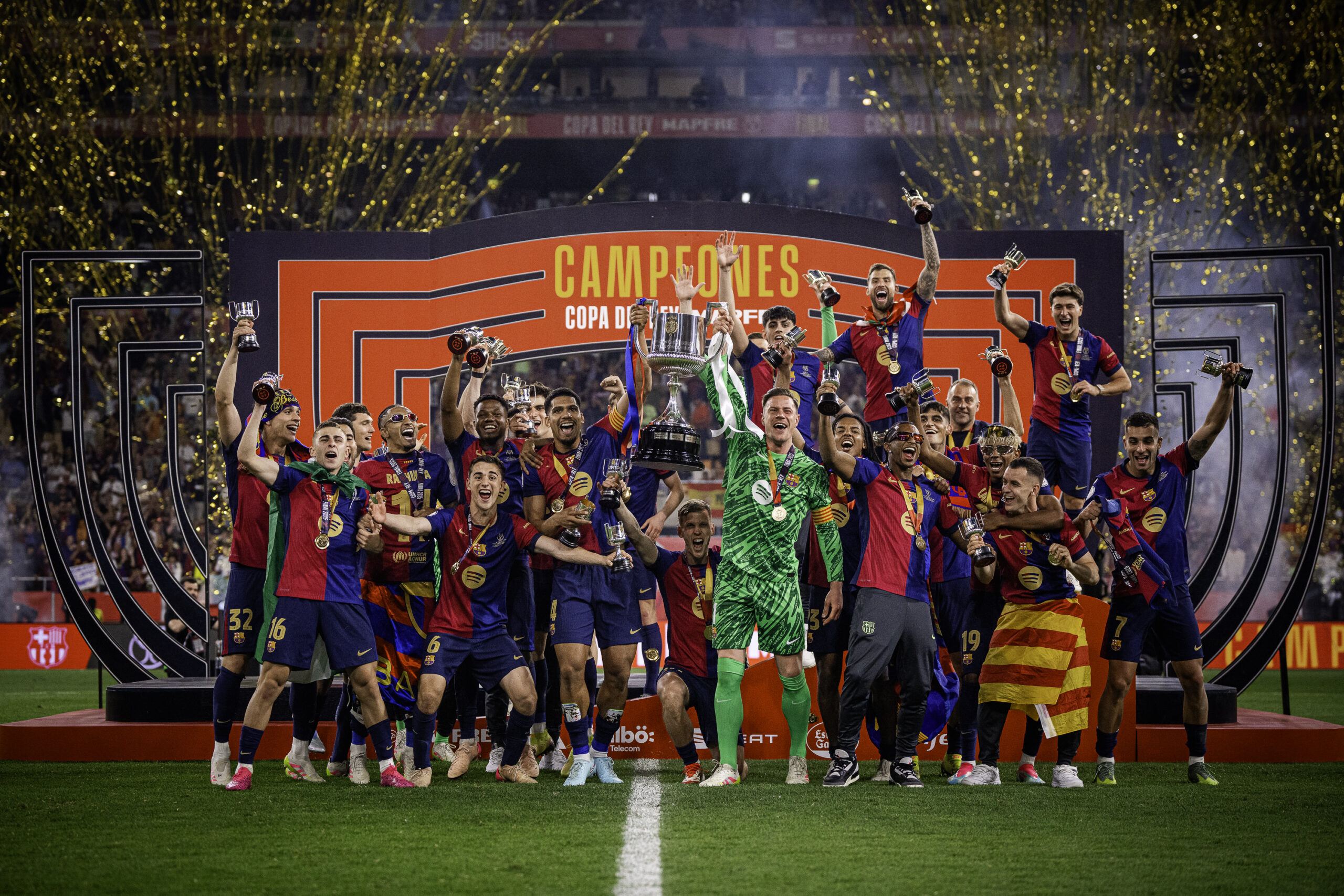
Under the bright lights of FC Barcelona’s home stadium, the celebrations felt like more than just another title party.
They felt like vindication.
After a season filled with tactical scrutiny, emotional swings, and relentless pressure, Barcelona delivered the performance that defined their campaign a composed and commanding 2-0 victory over eternal rivals Real Madrid CF to officially secure the La Liga crown.
Against their biggest rivals.
On the biggest domestic stage.
With complete authority.
This was not a chaotic Clásico built on random moments and emotional madness. This was a carefully controlled performance from a side that looked fully aware of what was required to become champions.
And for long stretches, Real Madrid looked like a team overwhelmed by unresolved tactical and psychological problems at exactly the wrong moment.
Barcelona Controlled the Match Before They Controlled the Scoreline
From the opening whistle, Barcelona’s intentions were obvious.
The hosts focused on:
• closing central passing lanes,
• forcing turnovers high up the pitch,
• and attacking the spaces left behind Madrid’s advancing fullbacks.
The plan worked almost immediately.
The real battle was won in midfield, where Barcelona’s rotating triangle completely disrupted Madrid’s pressing structure. Every movement created uncertainty. Every passing sequence pulled white shirts out of position.
Madrid initially attempted to press aggressively, but the distances between players quickly became problematic. One clean Barcelona pass repeatedly bypassed entire waves of pressure.
Once the first line of Madrid’s press was broken, the game opened dramatically for Barcelona.
What separated the champions from their rivals was patience.
Barcelona never forced attacks unnecessarily. They recycled possession calmly, slowed the tempo when required, then accelerated sharply through the half-spaces once gaps appeared.
That balance between control and vertical aggression defined the entire match.
Barcelona Played Like a Team — Madrid Played in Moments
The contrast between both sides became impossible to ignore as the match developed.
Barcelona attacked collectively.
Madrid attacked emotionally.
Every Barcelona move carried structure:
• overlapping runs,
• support between lines,
• organized rest defense,
• and coordinated pressing after possession losses.
Madrid, meanwhile, relied too heavily on moments of individual brilliance and transition chaos.
Too often, their attacking shape became disconnected. The forwards stayed high while the midfield line dropped too deep, leaving enormous gaps between buildup and attack.
That disconnect destroyed rhythm and invited frustration.
And once frustration entered Madrid’s performance, tactical discipline disappeared with it.
Madrid’s Midfield Structure Collapsed Under Pressure
The biggest problem for Madrid throughout the evening was spacing.
Barcelona repeatedly found dangerous pockets between midfield and defense because Madrid’s midfielders appeared uncertain whether to step forward aggressively or remain compact.
That hesitation became fatal.
At different moments:
• one midfielder pressed,
• another dropped deeper,
• while the defensive line remained frozen.
The result was a series of open passing lanes that Barcelona exploited repeatedly.
Instead of dictating the game psychologically, Madrid spent most of the night chasing movement and reacting to situations rather than controlling them.
Madrid’s Pressing Was Emotional, Not Coordinated
Another major issue for the visitors was the lack of synchronization in their press.
One player would attempt to trigger pressure, but the supporting movements behind him consistently arrived too late. Barcelona escaped repeatedly with quick one-touch combinations and intelligent positional rotations.
At elite level, pressing only works when the entire structure reacts together.
Madrid looked like individuals attempting to solve problems alone.
That is why Barcelona appeared calmer and more composed in possession despite the enormous pressure surrounding the occasion.
Defensive Transition Completely Hurt Madrid
Every time Madrid lost possession in advanced areas, Barcelona immediately looked dangerous.
The protection in front of the back line was weak, and Barcelona’s runners attacked those exposed channels relentlessly throughout the match.
The second goal perfectly captured Madrid’s biggest defensive weakness.
It was not simply the finish that damaged them it was the disorganized recovery structure leading up to it.
For a side with Madrid’s experience and pedigree, the level of defensive transition management in a title-deciding Clásico felt alarmingly poor.
Pedri Controlled the Entire Rhythm of the Match
Among several outstanding Barcelona performances, Pedri stood above almost everyone on the pitch.
His influence was subtle but devastating.
He dictated tempo beautifully, manipulated space with intelligence, and constantly provided clean passing outlets under pressure. Madrid never truly solved the problem he created between the lines.
This was not flashy football for highlight reels.
It was intelligent football designed to control the emotional direction of the game.
Pedri played like someone already aware of how the night would end.
Barcelona’s Width Created Constant Problems
Barcelona’s wide structure also played a crucial role in destabilizing Madrid’s defense.
The positioning of the wide players forced Madrid into impossible decisions:
• stay narrow centrally and leave dangerous space wide,
• or stretch outward and expose interior channels.
Madrid never looked comfortable choosing between the two.
That uncertainty repeatedly opened spaces for Barcelona’s attacking midfield runners to exploit.
Barcelona’s Defensive Discipline Completed the Performance
Quietly, this may have been one of Barcelona’s most disciplined defensive displays in a major match all season.
Their counter-pressing after losing possession was exceptional. Every time Madrid attempted to break forward, Barcelona immediately surrounded the ball carrier aggressively.
That pressure prevented Madrid from creating the open-field chaos they usually thrive on.
Barcelona denied them emotional momentum completely.
Barcelona Looked Like Champions — Madrid Looked Nervous
Beyond tactics, the psychological contrast between both sides was impossible to ignore.
Madrid entered the match carrying pressure.
Barcelona entered carrying belief.
Every misplaced Madrid pass increased anxiety inside their structure.
Every calm Barcelona passing sequence increased confidence inside the stadium.
By the second half, the atmosphere around the ground already felt like a title celebration waiting for confirmation.
Madrid, meanwhile, began forcing attacks:
• rushed through balls,
• speculative efforts,
• crosses from poor angles.
That is often the clearest sign of a team mentally losing control of a high-pressure match.
A Defining Statement for Both Clubs
This result carries consequences far beyond the trophy itself.
For Barcelona:
• it validates the rebuild,
• reinforces belief in the tactical project,
• and proves their younger core can handle elite pressure.
For Madrid, serious questions now become unavoidable:
• Is the midfield transition fully settled?
• Is the defensive structure reliable enough in major games?
• Has the team become too dependent on individual moments rather than collective systems?
Because against an organized and emotionally composed Barcelona side, individual brilliance simply was not enough.
Final Verdict
Barcelona did not stumble into this title.
And against Real Madrid, they proved exactly why.
They were:
• tactically sharper,
• emotionally calmer,
• structurally stronger,
• and collectively superior.
Madrid arrived hoping moments would save them.
Barcelona arrived with a plan.
Only one of those approaches consistently produces champions.
And under the roaring lights of Catalunya, Barcelona reminded Spanish football exactly who sits on the throne tonight.