

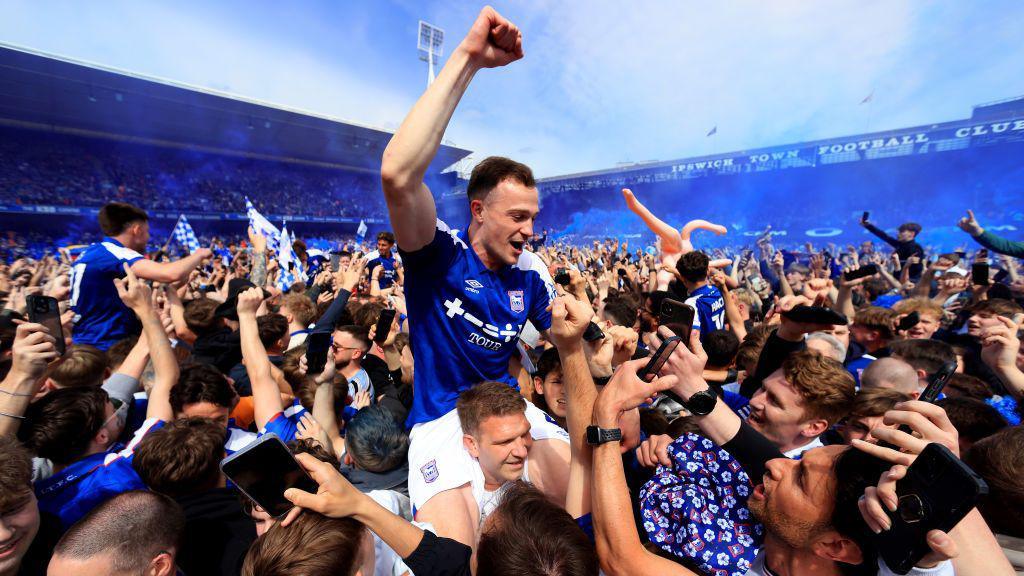
A Historic Club Reclaims Its Place
There is something quietly compelling about the return of Ipswich Town to the Premier League.
Not a rise built on noise or excess, but one grounded in steady progress and clear direction. It is the kind of comeback that feels earned less a sudden breakthrough, more a long-awaited continuation of a story that never truly ended.
Ipswich are not simply newcomers to the top flight. They are a club with deep roots, re-emerging after years away from the spotlight.
A Legacy of Achievement
Ipswich Town’s history places them among England’s most respected traditional clubs.
Under Alf Ramsey, they secured the league title in 1961–62 a remarkable achievement that remains one of English football’s great stories. Ramsey would later guide England to World Cup success, further cementing his legacy.
The club added to its honours with FA Cup success in 1978 and reached continental heights in 1981, winning the UEFA Cup under Bobby Robson. During that era, Portman Road established a reputation as one of the most challenging venues in the country.
Years in the Wilderness
The early 2000s saw Ipswich briefly re-establish themselves in the Premier League under George Burley, but that momentum proved difficult to sustain.
Relegation followed, and in the years that came after, the club struggled for consistency. Extended periods in the Championship and even a spell in League One left Ipswich outside the national conversation, a historic name operating away from the highest level.
The McKenna Transformation
The turning point came with the appointment of Kieran McKenna.
Under his leadership, Ipswich have undergone a clear tactical and cultural transformation:
- A proactive, front-foot style of play
- Intelligent pressing and quick transitions
- Recruitment aligned with a defined football identity
The result has been sustained progress, culminating in successive promotions that underline the effectiveness of the project.
This has not been a short-term surge, but a structured rebuild.
Premier League Return: Survival or Impact?
Ipswich now enter a Premier League landscape defined by financial power, tactical sophistication, and relentless competition.
The immediate objective will be survival, but the club’s history suggests a capacity to exceed expectations. Free from the burden of heavy external pressure, Ipswich arrive with momentum and cohesion qualities that can prove valuable in a demanding environment.
Final Word
Ipswich Town’s return is more than a promotion story.
It is a reminder that in football, tradition and identity still matter. Clubs with history may fall from prominence, but they rarely disappear completely.
Now back among England’s elite, Ipswich have the opportunity to write a new chapter one that connects past achievement with present ambition.
And in a league often dominated by established giants, their quiet re-entry may yet prove significant.