The Royal Belgian Football Association (RBFA) has launched a scathing attack on FIFA following the governing body’s unprecedented decision to suspend the implementation of United States striker Folarin Balogun’s automatic one-match ban at the 2026 FIFA World Cup.
In a strongly worded statement, the Belgian federation described FIFA’s decision as one that “crossed a red line,” arguing that it undermines the integrity of football and sets a dangerous precedent for the remainder of the tournament.
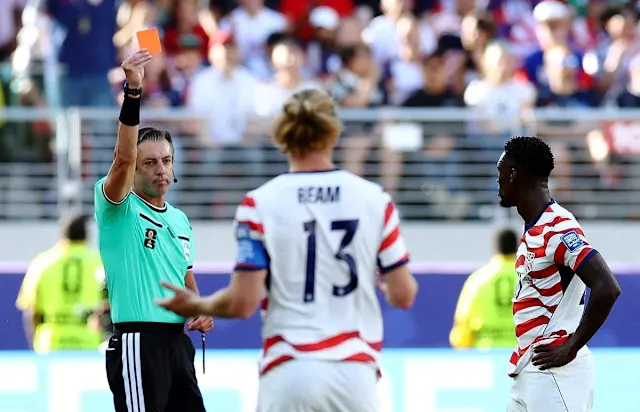
Balogun had been due to miss the United States’ Round of 16 clash after receiving a straight red card in his previous match. However, FIFA opted to suspend the one-match sanction on probation for one year, allowing the striker to remain available for selection.
Belgium insists the automatic suspension for a red card is a fundamental principle of the sport that should not be subject to interpretation or exceptions.
According to the RBFA, football’s credibility depends on the consistent application of its rules, warning that altering such regulations during a major tournament threatens the fairness of the competition.
The federation argued that the suspension rule is clearly embedded in football’s regulations and should apply equally to every player, particularly when other players in similar situations have already served their mandatory bans.
Belgium further warned that FIFA’s ruling could have far-reaching consequences beyond the World Cup, as future disciplinary cases may now demand similar treatment, potentially undermining confidence in the game’s disciplinary process.
“Football, like any other sport, relies on rules, which are the basis for fair, honest and transparent competition,” the statement read.
The RBFA added that when the certainty of the rules is no longer guaranteed by those responsible for enforcing them, the integrity of the game is placed at risk and the credibility of the competition is damaged.
Calling the ruling “unprecedented, incomprehensible and unjustifiable,” Belgium expressed disbelief at FIFA’s intervention and warned that the decision could negatively impact football far beyond the current World Cup.