
The tennis world is often defined by fine margins timing, momentum, and the ability to adapt. This week, two contrasting narratives have emerged that highlight just how delicate that balance can be. While Sonay Kartal faces a frustrating setback at a crucial moment in her rising career, Iga Świątek is making calculated moves to strengthen her dominance at the very top of the game guided, in part, by the enduring influence of Rafael Nadal.
Kartal Sidelined at a Crucial Moment
There is rarely a good time for injury, but for Kartal, the timing could hardly be worse. The young British star has been forced to withdraw from Great Britain’s Billie Jean King Cup qualifier, interrupting a period in which she had begun to build real momentum on the tour.
Her absence represents more than just a missing name on the team sheet. Kartal had been one of Britain’s in-form players, bringing consistency, energy, and adaptability qualities that are particularly valuable in team competitions where chemistry and confidence often prove decisive.
For Great Britain, the implications are immediate. The team must now reshuffle its line-up, placing increased responsibility on leading players such as Katie Boulter, while also reconsidering doubles combinations that previously benefited from Kartal’s versatility. What might have been a settled approach now becomes a tactical recalibration.
Yet, in the broader context of her career, this setback appears to be a pause rather than a derailment. Kartal remains firmly in the developmental phase of her journey, and how she manages recovery and her return to competition will be just as important as the progress she had been making on court.
Świątek Looks Ahead with Strategic Shift
While Kartal is forced to step back, Świątek is taking a proactive step forward. Already one of the dominant forces in women’s tennis, the world number one has opted to refine her approach by bringing in experienced coach Wim Fissette, a move widely seen as both strategic and forward-thinking.
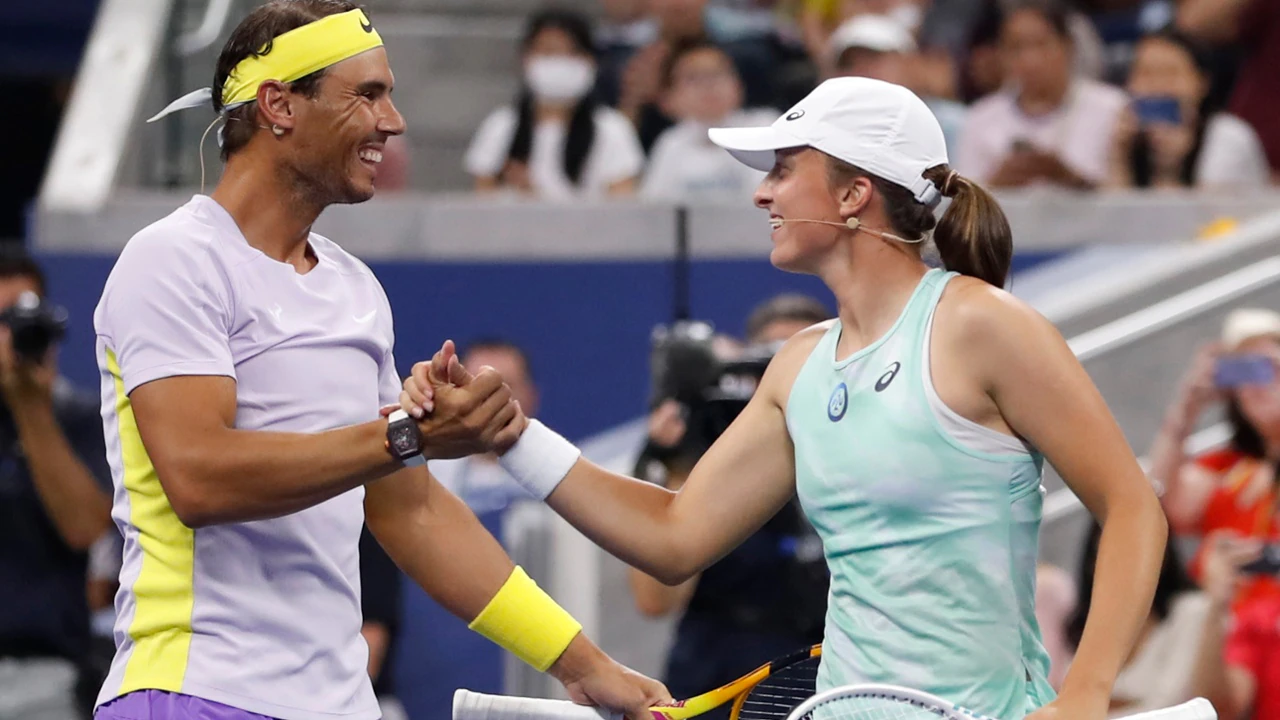
The decision is further underscored by the quiet but growing influence of Nadal, whose legacy extends beyond his own achievements on the court. Known for his relentless mentality and clay-court mastery, Nadal’s guidance is increasingly shaping the thinking of the next generation.
For Świątek, the parallels are clear—dominance built on discipline, physical intensity, and mental resilience. But this latest move is less about maintaining her current level and more about evolving beyond it.
Fissette’s track record with Grand Slam champions suggests a focus on fine-tuning rather than overhauling. His tactical expertise, particularly in high-pressure matches, could help Świątek diversify her game adding variety, improving adaptability, and ensuring she remains ahead of an increasingly competitive field that includes players like Coco Gauff and Aryna Sabalenka.
A Sport Defined by Timing and Evolution
What makes these two stories compelling is the contrast they present. Kartal’s situation is a reminder of how quickly progress can be interrupted, especially for emerging players still establishing themselves. Świątek’s, by contrast, illustrates how champions think ahead adapting even when they are already winning.
At a wider level, Nadal’s growing presence off the court hints at a new chapter in tennis. Through mentorship, coaching influence, and his renowned academy, the Spaniard is beginning to shape the sport in a different way one that could define the tactical direction of future generations.
Final Word
For Great Britain, Kartal’s absence is a test of depth and resilience. For Świątek, this is a statement of intent a clear signal that dominance alone is not enough without continuous evolution.
In a sport where margins are everything, the difference between setback and success often lies in how players respond. And while one rising star waits to return, another is already preparing to stay ahead.