The biggest shock in tennis right now is not a stunning upset or controversial result.
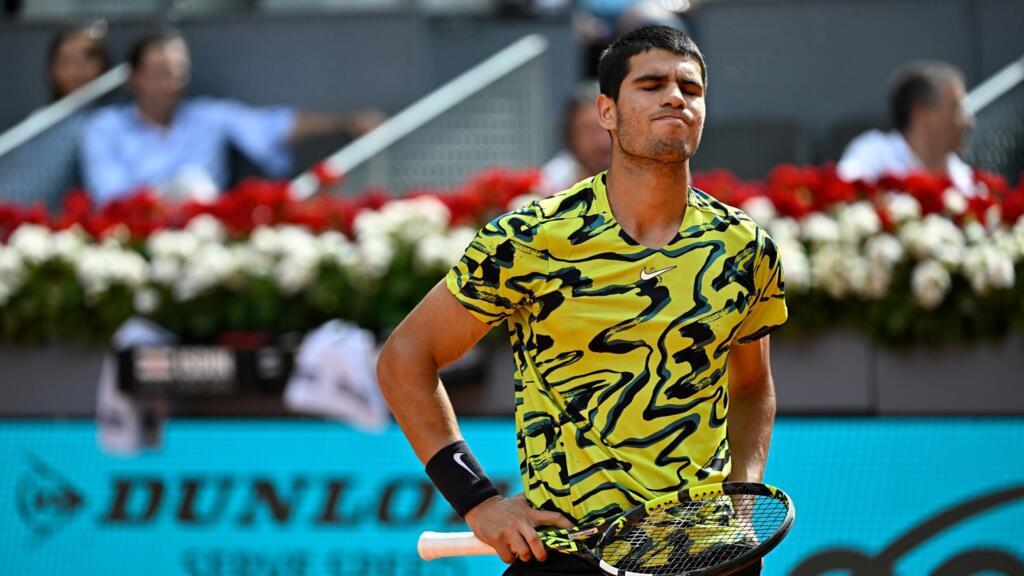
It is the absence of Carlos Alcaraz.
The Spanish superstar’s decision to withdraw from Wimbledon and the entire grass-court season because of injury has sent a wave of anxiety through the sport, instantly reshaping conversations around the ATP Tour and raising uncomfortable long-term questions about the physical demands facing tennis’ new generation.
For many fans, the reaction has been emotional because Alcaraz is no longer viewed simply as a top player he has become the symbolic face of post-Big Three tennis.
His explosive athleticism, charisma, shot-making creativity, and ability to thrive on every surface made him the overwhelming focal point of this grass-court season. Many expected him to dominate Wimbledon once again, particularly given how naturally his aggressive all-court game translates to grass.
Now, without him, the tournament suddenly feels unpredictable.
The withdrawal has also intensified a growing concern within tennis circles: is Alcaraz being pushed too hard too early?
At just 23 years old, conversations about workload management, injury prevention, and long-term physical sustainability are already surrounding him, discussions normally associated with players much later in their careers. Modern tennis schedules have become increasingly brutal, and Alcaraz’s relentless style of play demands enormous physical output every week.
The fear among fans is obvious.
Nobody wants the sport’s brightest young superstar carrying the kind of long-term wear that shortened or complicated previous great careers.
Ironically, Alcaraz’s absence may have reopened the door for one man tennis simply refuses to leave behind:
Novak Djokovic.
At 39 years old, Djokovic continues defying every normal sporting timeline. With Alcaraz unavailable, discussions around another Grand Slam opportunity for the Serbian legend have intensified dramatically. Tennis fans remain stunned that Djokovic is still competing deep into major tournaments while surviving multiple generational transitions around him.
The sport has already watched him outlast one era.
Now he is somehow threatening the next one too.
While the ATP Tour adjusts to Alcaraz’s absence, the women’s game is entering one of its most compelling periods in years.
Coco Gauff is increasingly beginning to feel like the emotional and competitive center of modern women’s tennis.
Her latest deep run in Rome, including another statement victory over Sorana Cirstea, further reinforced the sense that Gauff is evolving from talented contender into genuine superstar leader. But the bigger storyline surrounds her growing psychological edge against Iga Swiatek.
Not long ago, Świątek’s dominance over much of the WTA Tour appeared almost absolute. Now, however, Gauff has emerged as one of the few players capable of genuinely unsettling the Polish star mentally and tactically.
That shift has energized fans because the women’s game suddenly feels wide open again.
Świątek remains elite.
Aryna Sabalenka remains explosive.
Elena Rybakina remains dangerous.
And younger stars are arriving rapidly behind them.
Among the most fascinating emerging names is Mirra Andreeva, who is quickly becoming one of tennis social media’s favorite personalities. Fans are drawn not only to her tactical maturity and fearless style, but also to her humor, confidence, and refusal to appear intimidated by established stars.
For many observers, Andreeva already looks like a future face of the WTA once the current hierarchy eventually shifts.
Another rising player attracting enormous grassroots support is Alexandra Eala.
Eala’s growing popularity stems from more than results alone. Her energy, emotional intensity, and willingness to challenge higher-ranked opponents have made her especially beloved among Asian tennis communities, where many fans now view her as a potential breakthrough global star over the next few seasons.
Her rise also reflects a broader transformation happening within tennis:
the sport’s next generation is becoming increasingly global, diverse, and culturally influential beyond traditional power centers.
Taken together, the current state of tennis feels both unstable and exciting.
The ATP Tour suddenly lacks its most explosive young superstar for the biggest grass-court tournament of the year. Djokovic continues resisting time itself. The WTA hierarchy is becoming increasingly unpredictable. And a new generation of personalities is rapidly capturing the imagination of online tennis culture.
For fans, that unpredictability creates both anxiety and fascination.
Because right now, tennis feels like a sport standing directly between eras with nobody fully certain who will ultimately control the next one.