Modern boxing has always thrived on contradiction.
It is a sport obsessed with tradition, yet constantly chasing spectacle. A business built on legacy, but increasingly driven by viral moments, celebrity culture, and crossover entertainment.
Right now, those two worlds are colliding harder than ever.
Nothing reflects boxing’s current identity crisis more clearly than the growing possibility of a rematch between Floyd Mayweather Jr. and Manny Pacquiao.
More than a decade after their first megafight dominated global sports conversation, reports suggest the two legends are moving toward another showdown in Las Vegas later this year. The reaction has been exactly what modern boxing thrives on: divided, emotional, and commercially irresistible.
Older fans see nostalgia.
Younger audiences see a fight that arguably missed its perfect timing years ago.
Promoters see guaranteed money.
And in boxing, money usually wins the argument.
The fascination surrounding a Mayweather Pacquiao rematch says a great deal about the sport itself. Boxing rarely lets old rivalries fully disappear because unfinished narratives remain profitable forever. Even now, long after both fighters passed their physical peaks, the emotional weight of their names still carries enormous power.
At the same time, boxing’s present generation continues producing stars capable of creating entirely new mythology.
Naoya Inoue further strengthened his terrifying reputation after defeating Junto Nakatani in what became one of the biggest boxing spectacles ever staged at the Tokyo Dome.
What makes Inoue especially frightening for the rest of the sport is that many observers believe he is still improving.
The Japanese superstar has moved beyond simple championship discussions into something much larger: pound-for-pound supremacy debates. Fans and analysts are increasingly struggling to identify realistic challengers capable of genuinely threatening him, which is often the clearest sign a fighter is approaching legendary territory.
Meanwhile, outside the ropes, boxing’s political structure may be changing just as dramatically as its fights.
Dana White and Zuffa Boxing are beginning to exert real pressure on traditional boxing systems. After years of speculation, the project is now actively signing fighters, organizing events, and positioning itself as a disruptive alternative to boxing’s fragmented promotional landscape.
The development has created both excitement and anxiety.
Supporters believe Zuffa could modernize matchmaking, improve event consistency, and bring UFC-style organizational clarity to a sport long criticized for political chaos. Critics fear boxing could lose some of its unique identity by moving too aggressively toward MMA-inspired structures.
Either way, promoters across the industry are paying attention because the balance of power may genuinely be shifting.
Inside the ring, Ryan Garcia is attempting to reposition himself at the center of boxing culture once again.
After capturing the WBC welterweight title, Garcia publicly declared his ambition to become “the face of boxing” a statement that immediately reignited debate around one of the sport’s most polarizing figures.
Some fans believe Garcia is finally maturing into the superstar many predicted years ago. Others remain unconvinced, pointing to controversies, suspensions, and inconsistency that have complicated his career trajectory.
Still, Garcia understands something essential about modern boxing:
conversation matters almost as much as victories.
By openly pursuing fights against Conor Benn, a rematch with Devin Haney, and eventually another collision with Gervonta Davis, Garcia has positioned himself directly inside the sport’s most commercially explosive storylines.
The welterweight division increasingly resembles a reality show filled with elite athletes, personal grudges, social-media warfare, and nonstop promotional tension.
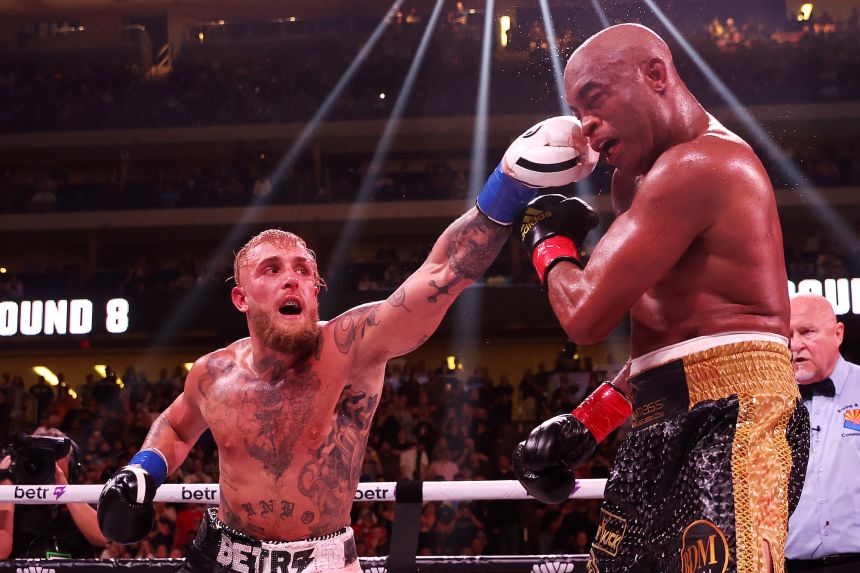
And then there is influencer boxing the chaotic side universe boxing purists can no longer ignore.
Misfits Boxing has embraced complete absurdity with events that seem designed specifically for internet virality. The upcoming clash between Tommy Fury and former World’s Strongest Man Eddie Hall features an astonishing weight difference large enough to horrify traditionalists instantly.
Purists criticize it relentlessly.
Online audiences consume it enthusiastically.
That contradiction perfectly summarizes modern boxing’s reality.
The sport is simultaneously producing elite technical greatness, massive nostalgia events, political restructuring, and carnival-style entertainment all at the same time. Traditional fans may resist certain changes, but the commercial numbers attached to crossover fights and influencer events continue proving there is enormous appetite for spectacle.
Which leaves boxing in a strange but fascinating position.
It remains one of the world’s oldest combat sports.
Yet it increasingly behaves like a modern entertainment universe where legacy, celebrity, social media, and chaos coexist inside the same ring.