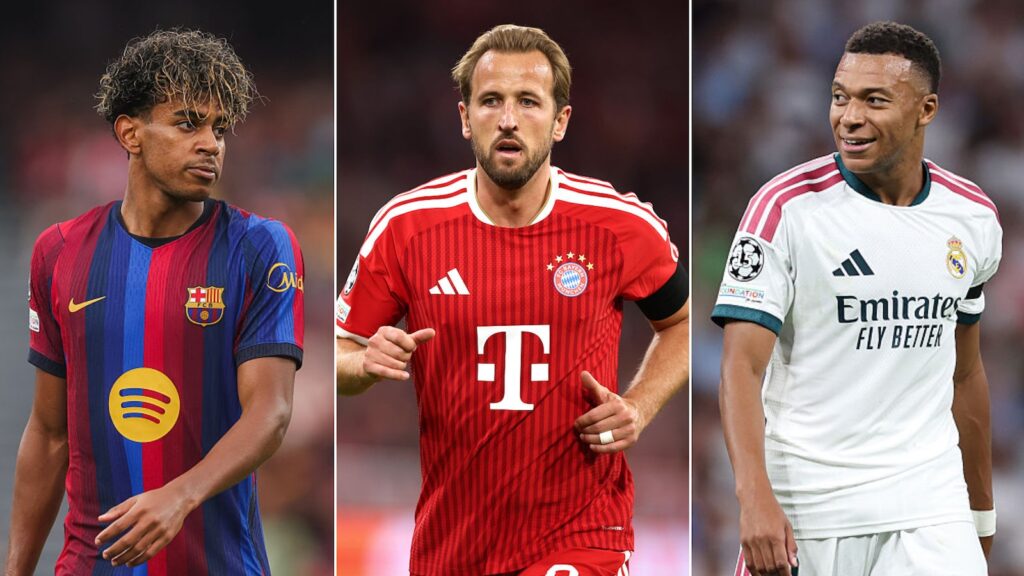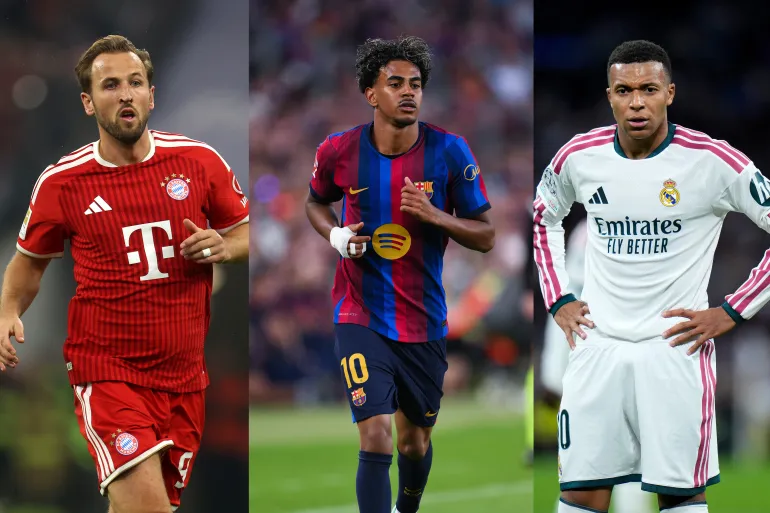
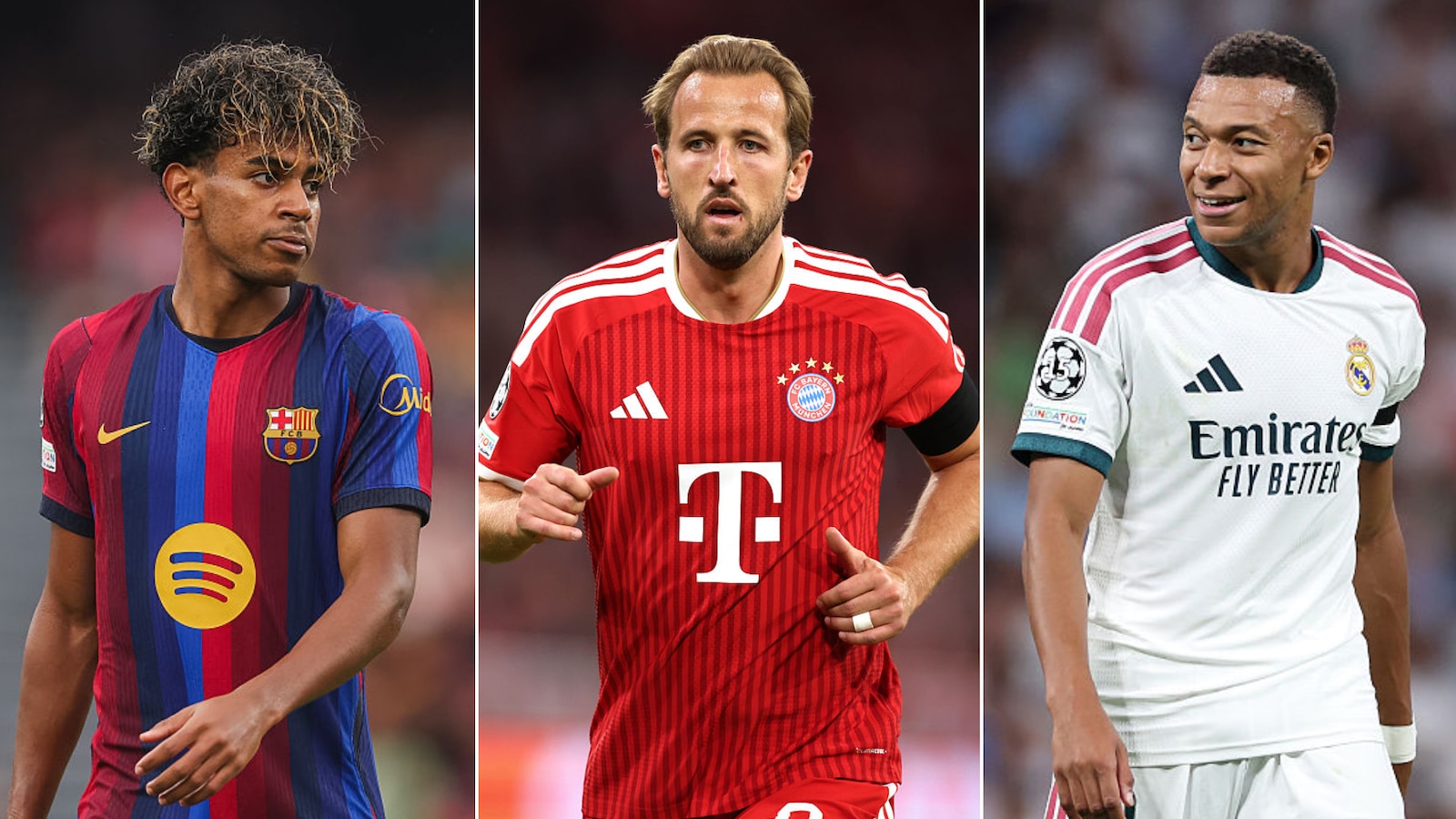
As the football world turns its attention to the 2026 Ballon d’Or, the contest for the men’s award presents a compelling question: should the prize go to the most prolific goalscorer, the most influential creative talent, or the superstar whose individual numbers remain extraordinary despite a trophyless campaign?
Harry Kane, Lamine Yamal and Kylian Mbappé have each built a strong case, but their performances tell three very different stories. Kane has delivered an avalanche of goals for Bayern Munich and England, Yamal has combined creativity with individual brilliance while collecting major honours, and Mbappé has continued to produce remarkable attacking numbers even without silverware.
A statistical comparison of their performances between August 2025 and July 2026 offers a clearer picture of who may have done enough to claim football’s most prestigious individual award.
If the Ballon d’Or were decided primarily by goals and direct attacking output, Kane would have a compelling claim.
The Bayern Munich striker recorded 73 goals and eight assists in 65 appearances during the assessment period, giving him 81 direct goal contributions. His numbers place him ahead of both Yamal and Mbappé in the comparison, underlining his importance to Bayern’s attacking production.
His goalscoring record across competitions also strengthens his case. According to Sofascore’s assessment, Kane scored 36 goals in the Bundesliga and added 14 in the Champions League. He also contributed 12 goals for England during the period, including six at the World Cup.
The central question is whether his superiority in goals and overall goal contributions should outweigh Yamal’s greater influence in creating opportunities and shaping attacking play.
Yamal offers more than goals
While Kane leads the statistical race in goals, Yamal presents a different argument: football’s best player should not necessarily be the one who scores the most, but the one who influences the game in the greatest number of ways.
The Barcelona winger recorded 25 goals and 20 assists in 57 appearances, producing 45 direct goal contributions. Although that total falls well below Kane’s, Yamal’s creative numbers reveal why he remains a serious contender.
Yamal also recorded the highest average rating among the three players in Sofascore’s comparison, with 7.83, narrowly ahead of Kane’s 7.79 and Mbappé’s 7.74.His trophy collection further strengthens his position. Barcelona’s success in La Liga and the Spanish Super Cup, alongside Spain’s World Cup triumph, provides a significant team-achievement argument in his favour.
However, the gap between his 45 goal contributions and Kane’s 81 remains substantial. To overcome that difference, Yamal’s supporters must persuade voters that his creativity, all-round influence and major honours carry greater weight than Kane’s extraordinary finishing record.
Mbappé’s numbers are elite, but trophies could hurt his chances
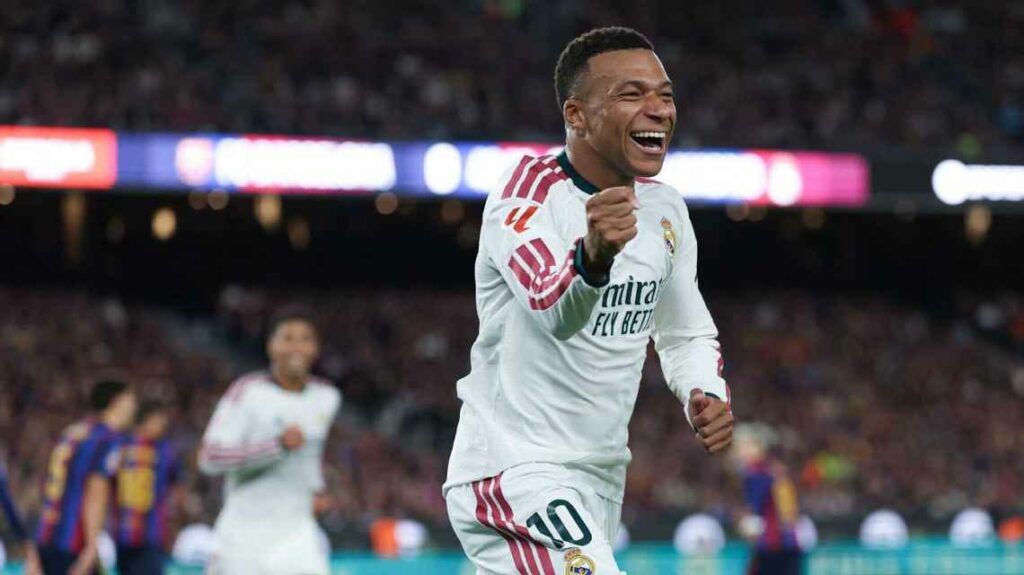
Mbappé enters the conversation with statistics that would ordinarily place him firmly among the leading candidates.
The Real Madrid forward recorded 58 goals and 13 assists in 60 appearances, giving him 71 direct goal contributions. That puts him second behind Kane in the comparison, despite his campaign lacking the major team honours enjoyed by the England striker and Yamal.
Ballon d’Or voting is not governed by a published formula that awards fixed points for goals, assists or titles. Nevertheless, team achievements and performances in major competitions have historically formed an important part of the debate. Mbappé’s numbers make him a legitimate contender, but the lack of silverware weakens his overall narrative compared with Kane and Yamal.
His challenge is to convince voters that his individual excellence should outweigh the collective achievements of his rivals.
What the numbers reveal
The statistical comparison presents a clear contrast between the three candidates.
Kane leads in goals, assists combined and total appearances, giving him the strongest raw attacking output. Yamal leads in creative influence and average rating, while also boasting major honours. Mbappé sits between them in direct goal contributions but lacks the trophy advantage enjoyed by the other two.
Kane’s 81 goal contributions are 10 more than Mbappé’s 71 and 36 more than Yamal’s 45. Those differences are significant, particularly when considered alongside Bayern’s domestic success.
However, counting goals and assists alone cannot fully capture a player’s influence. Yamal’s 52 big chances created and exceptional dribbling figures demonstrate how much of Barcelona’s attacking threat comes from his ability to manufacture opportunities. Meanwhile, Mbappé’s scoring record shows that his campaign remains extraordinary even without a major trophy.
The numbers therefore point to different definitions of excellence: Kane as the most productive finisher, Yamal as the most influential creator and Mbappé as a prolific forward whose individual performances have outpaced his team’s achievements.
Who should win the 2026 Ballon d’Or?
On the statistical evidence available, Kane has the strongest overall case, with Yamal a serious challenger.
The Bayern striker’s 73 goals, 81 direct goal contributions and three trophies create a particularly convincing combination of individual dominance and team success. His advantage is not marginal: he has produced considerably more goals and assists than either rival while helping his club win major honours.
Yamal, however, offers the strongest alternative. His creative numbers, dribbling ability, superior average rating and trophy haul make him a credible candidate if voters prioritise all-round influence over pure attacking production.
Mbappé remains a formidable contender, but his lack of major trophies could prove decisive in a race where his rivals can point to both outstanding statistics and collective success.
Ultimately, the Ballon d’Or is not awarded through a simple mathematical calculation. Voters must weigh individual performances, consistency, decisive moments and team achievements, and reasonable observers can disagree about how those factors should be balanced.
Still, if the decision were based on a combination of goalscoring output, consistency and trophies, Kane would be the logical statistical favourite. Yamal’s creativity makes the contest closer than the goal totals suggest, but Kane’s numbers provide the most persuasive argument.
The verdict: Kane leads on the statistics, Yamal challenges on overall influence, and Mbappé remains the dangerous outsider. The final decision rests on which definition of greatness the voters value most in 2026.