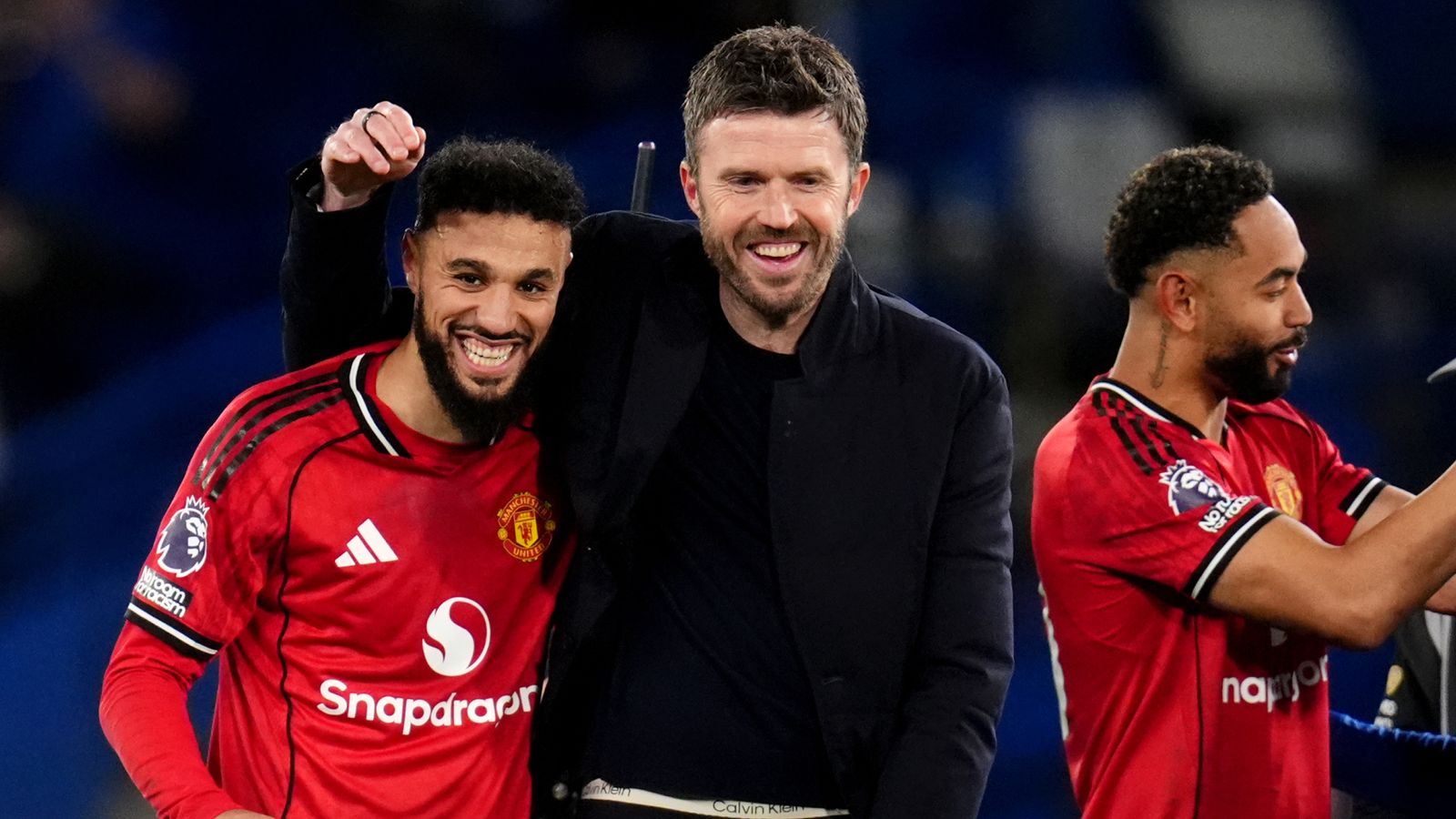
For a long time, the idea of Manchester United handing the managerial job permanently to Michael Carrick felt more emotional than logical.
A respected former player? Absolutely.
A calm and intelligent football mind? Without question.
But the permanent answer for one of the biggest clubs in world football?
Many supporters were unconvinced.
Now, the mood around Old Trafford has changed dramatically.
Recent reports surrounding Carrick’s future suggest the club are increasingly leaning toward making his appointment permanent after guiding United back into UEFA Champions League qualification contention during his interim spell. And the truth is becoming difficult to ignore:
This no longer feels like a sentimental decision.
It feels like a football decision.
Stability Has Returned To Old Trafford
When Carrick stepped in following the departure of Ruben Amorim, Manchester United looked emotionally exhausted and tactically confused.
Performances lacked structure.
The midfield looked disconnected.
Confidence across the squad appeared fragile.
Yet within weeks, the atmosphere shifted.
The biggest transformation has not necessarily been flair or spectacle — it has been control.
United suddenly resemble a coherent side again:
- possession has purpose,
- defensive spacing looks cleaner,
- pressing triggers are more coordinated,
- and players finally appear comfortable within their roles.
Most importantly, panic has disappeared from their football.
For years, United often looked like a team reacting emotionally to games rather than controlling them. Carrick’s version looks calmer, more measured, and far more modern.
Carrick’s Football Feels Modern — But Still “United”
One of the most fascinating aspects of Carrick’s rise is how naturally his football connects with Manchester United’s traditional identity.
This is not sterile possession football for the sake of aesthetics.
There is still attacking ambition.
Young players are trusted.
Transitions remain aggressive when opportunities appear.
But unlike previous eras, there is also balance.
United’s midfield now progresses the ball intelligently instead of relying solely on chaos and individual brilliance. The structure behind the attack gives the team far more emotional stability during difficult moments.
That balance matters enormously.
Since the retirement of Alex Ferguson, United have repeatedly swung between extremes:
- emotional football without tactical consistency,
- tactical rigidity without identity,
- expensive rebuilds without long-term cohesion.
Carrick appears to sit somewhere in the middle:
- tactically flexible,
- emotionally intelligent,
- culturally aligned with the club.
That combination could become the foundation of a sustainable rebuild.
The Kobbie Mainoo Effect
Perhaps no player better represents Carrick’s impact than Kobbie Mainoo.
Earlier in the season, Mainoo often looked burdened by responsibility. Under Carrick, he looks liberated.
He is receiving possession in cleaner zones, progressing play more confidently, and dictating tempo with maturity beyond his age.
Meanwhile, Bruno Fernandes has also rediscovered rhythm in a freer attacking role, operating with greater creative freedom while still contributing within a structured system.
Everything about United currently feels more coherent.
And coherence has been painfully absent at Old Trafford for years.
The Real Challenge Starts Now
Of course, interim success and long-term management are completely different realities.
Temporary managers often benefit from lowered expectations and emotional resets. Permanent appointments come with relentless scrutiny.
Every defeat becomes a crisis.
Every tactical adjustment becomes debate material.
Every transfer decision becomes political.
Carrick will now have to prove he can build not simply stabilize.
That means recruitment becomes crucial.
If Manchester United truly want Carrick to define a new era, the club must finally recruit according to football identity rather than commercial noise.
His system requires:
- technically secure midfielders,
- intelligent pressing forwards,
- defenders comfortable progressing possession,
- and tactical discipline across the squad.
Without alignment between coaching and recruitment, even promising projects collapse quickly at elite clubs.
Why The Dressing Room Matters
One of the strongest themes emerging from Carrick’s tenure has been improved morale inside the squad.
Players appear calmer.
Relationships look healthier.
The atmosphere feels less toxic.
That matters enormously in modern football.
Elite managers today are not simply tacticians they are communicators, psychologists, and emotional managers.
Carrick’s calmness has spread through the team.
Ironically, after years of chasing larger-than-life personalities, Manchester United may finally need something simpler:
- stability,
- clarity,
- and emotional balance.
Not another revolution.
Just a manager who understands both the club and the modern game.
The Verdict
There are still legitimate concerns.
Carrick remains relatively inexperienced at the highest managerial level, and a full season combining Premier League pressure with Champions League expectations will test him in ways an interim spell never could.
Difficult moments will come.
Setbacks are inevitable.
The real evaluation begins once adversity arrives.
But for the first time in a long while, Manchester United’s football actually feels aligned with its future.
And if Carrick continues on this trajectory, what began as an emergency solution could ultimately become the smartest post-Ferguson decision the club has made.