
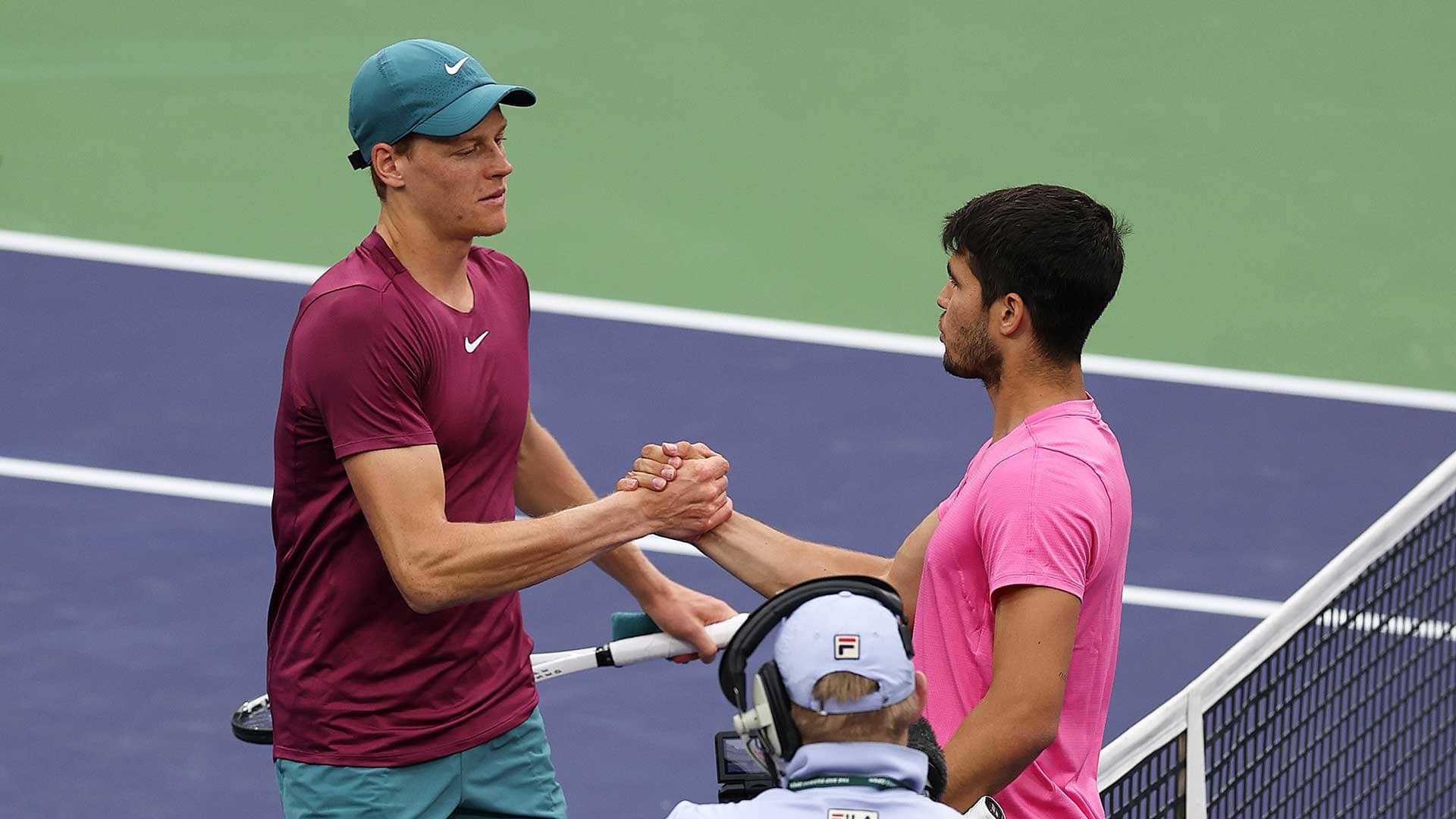
The transition from hard courts to clay has officially begun, and with it comes one of the most tactically demanding phases of the tennis calendar. The Monte Carlo Masters is already offering early indicators of form, with Carlos Alcaraz and Jannik Sinner advancing confidently as the race toward Roland Garros gathers momentum.
Clay Court Tennis: The Ultimate Test of Complete Players
Unlike faster hard courts, clay surfaces slow the game down and extend rallies, placing a premium on endurance, movement, and tactical awareness. Early performances in Monte Carlo suggest that the sport’s elite are already adapting, with Alcaraz in particular showing dominant form through the opening rounds.
From a performance standpoint, clay exposes every aspect of a player’s game:
- Footwork and court coverage
- Shot selection and patience
- Tactical discipline over long rallies
In modern tennis analysis, this is often where “complete players” separate themselves from power-based hitters who rely on shorter points.
Alcaraz vs Sinner: A Rivalry Defining the ATP Tour
The emerging rivalry between Alcaraz and Sinner is quickly becoming the central storyline in men’s tennis. Both players arrive on clay with significant momentum:
- Sinner completed the prestigious “Sunshine Double,” winning Indian Wells and Miami
- Alcaraz secured the 2026 Australian Open title, reinforcing his status at the top level
With the ATP rankings battle tightening, the clay season could prove निर्ण decisive in determining the next World No. 1. Beyond rankings, the rivalry carries broader significance, drawing comparisons to past eras dominated by legends.
From a tactical perspective:
- Sinner’s baseline consistency and control make him a formidable presence on slower courts
- Alcaraz’s explosiveness and variety offer a dynamic edge, particularly in extended rallies
As the tour builds toward the French Open, their head-to-head battles could shape the narrative of the season.
Rising Depth: Breakthrough Stories Across the Tour
While the spotlight remains on top stars, recent tournaments in Monte Carlo and beyond have highlighted the growing depth in men’s tennis.
Veteran Marco Trungelliti made headlines by becoming the oldest first-time ATP finalist at 36, while Tommy Paul continues to prove his versatility with a strong run on clay.
These developments point to a broader trend:
- The gap between the top 10 and the rest of the field is narrowing
- Experience remains competitive against younger talent
- Tournament outcomes are becoming less predictable
For analysts and fans alike, this increased parity is making the ATP Tour more competitive and engaging.
Off-Court Concerns: Integrity and Financial Pressure
Amid the on-court action, deeper issues within the sport have resurfaced. Trungelliti has drawn attention to ongoing concerns around match-fixing and the financial challenges faced by lower-ranked players.
The disparity is stark:
- Top-tier players earn millions in prize money and endorsements
- Lower-ranked competitors often struggle to cover travel and training costs
This imbalance creates vulnerabilities, raising integrity concerns that continue to challenge the sport’s governing bodies. As tennis grows globally, addressing these structural issues remains critical to maintaining credibility.
WTA Tour: Form Players Driving an Open Field
On the women’s side, Aryna Sabalenka continues to set the pace following dominant performances at Indian Wells and Miami. Meanwhile, Jessica Pegula is carrying strong form into the clay season, positioning herself as a key contender.
The current state of the WTA Tour reflects:
- High competitiveness across the field
- Frequent shifts in form and momentum
- No single dominant figure controlling the narrative
This unpredictability has become a defining feature of women’s tennis, particularly as the tour transitions onto clay.
Final Analysis
As the clay season unfolds, the early storylines point to a sport in transition and evolution:
- The Alcaraz–Sinner rivalry is shaping the future of men’s tennis
- Increased depth is making tournaments less predictable
- Structural challenges off the court remain a pressing concern
- The women’s game continues to thrive on competitiveness and form-driven success
With Roland Garros approaching, the coming weeks on clay will not only test physical endurance but also define the hierarchy of the 2026 tennis season.