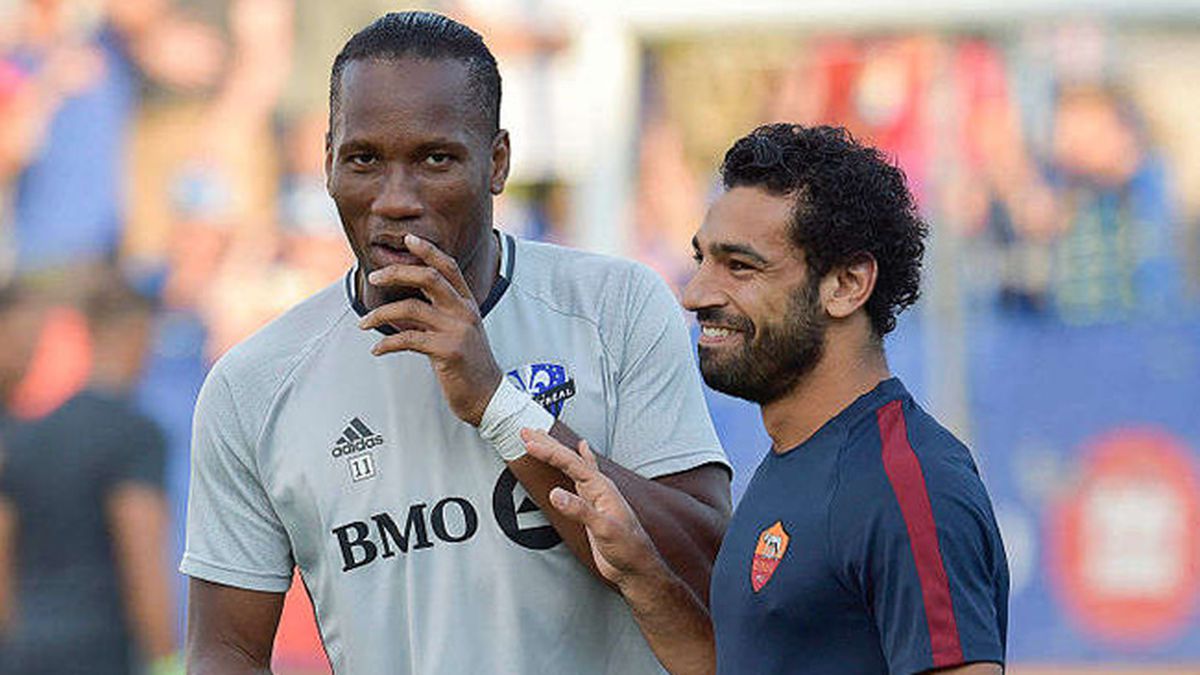
In the debate over big-game players in football, few comparisons are as compelling or as divisive as Didier Drogba versus Mohamed Salah. It is a clash not just of eras, but of philosophies: clutch moments vs consistency, finals impact vs season-long dominance, and ultimately, how greatness is defined in modern football.
Didier Drogba: The Ultimate Big-Game Player in Football History
When it comes to clutch performances in the UEFA Champions League and domestic finals, Drogba remains the gold standard. His legacy at Chelsea FC was forged not by volume but by timing.
Time and again, Drogba delivered when it mattered most:
- Decisive goals in FA Cup and League Cup finals
- A legendary, match-winning impact in a UEFA Champions League final
- Dominant displays against top Premier League rivals in high-pressure matches
These moments didn’t just win trophies they built a reputation as one of football’s most feared big-match strikers.
Tactically, Drogba was engineered for chaos:
- His physical strength and aerial dominance made him unstoppable in high-intensity games
- A direct attacking style allowed him to bypass compact defensive systems
- His emotional intensity and mentality elevated his performance on the biggest stages
In matches that turned scrappy, transitional, and physical often the reality of knockout football Drogba thrived. That environment didn’t limit him; it defined him.
Mohamed Salah: Premier League Consistency and Modern Football Excellence
On the other side stands Mohamed Salah, whose career at Liverpool FC represents the modern blueprint for elite forward play in the Premier League and Champions League.
Salah’s numbers speak for themselves:
- Consistently among the top scorers in Premier League goal charts
- Elite output in Champions League knockout stages and group phases
- A central figure in Liverpool’s title-winning and European campaigns
Yet despite his statistical dominance, questions persist around his big-game influence, particularly in finals highlighting the ongoing debate in football analysis between perception and performance.
Big-Game Performance: Clutch Moments vs Goal-Scoring Consistency
At the heart of the Drogba vs Salah debate is a key distinction in football analytics and legacy building.
Drogba’s goals were:
- Match-defining
- Trophy-winning
- Delivered in finals and decisive knockout ties
Salah’s goals, by contrast, are:
- High in volume across multiple competitions
- Spread throughout full league seasons
- Less frequently tied to singular, iconic final moments
For fans and analysts, this creates a classic SEO-friendly football debate:
“Is it better to deliver in the biggest moments or dominate consistently over time?”
Drogba mastered the moment. Salah masters the marathon.
Modern Football Tactics: Why Context Matters
The evolution of football tactics in the Premier League and Champions League plays a critical role in this comparison.
Salah operates in a modern system defined by:
- Data-driven defensive strategies
- Compact low blocks and structured pressing systems
- Constant double-marking and targeted defensive schemes
Drogba, meanwhile, played in an era where:
- Defensive structures were less rigid
- Physical duels defined attacking battles
- Space and unpredictability were more common in big matches
This shift explains why Salah often faces tighter margins in high-stakes games, where space is limited and defensive organization is elite.
Playing Style and Game-State Impact
The difference in playing style further shapes their big-game narratives:
- Drogba thrived in chaos imposing himself physically when games lost structure
- Salah excels in system-based football using movement, spacing, and tactical patterns to create chances
In tightly contested finals, where games become cagey and controlled, this distinction becomes crucial. Drogba’s style fits those moments naturally, while Salah’s effectiveness depends more on team structure and rhythm.
Narrative vs Reality: How Football Legacy Is Built
In football culture, legacy is not built on numbers alone it is shaped by narrative.
- Drogba is remembered for iconic, career-defining moments
- Salah is often scrutinized for the rare games where he doesn’t dominate
This creates a perception gap:
- One decisive goal can define a legacy
- Consistent excellence can sometimes feel less dramatic
It’s why Drogba’s reputation as a big-game player feels unquestioned, while Salah’s is constantly debated despite his elite output.
Final Verdict: Two Legends, Two Definitions of Greatness
This is not a question of superiority it is a reflection of how modern football evaluates greatness.
- Didier Drogba represents the ultimate clutch striker, defined by decisive goals in finals and high-pressure moments
- Mohamed Salah represents the modern elite forward, delivering sustained excellence across seasons with key contributions in major competitions
Conclusion: Redefining Big-Game Mentality in Football
The Drogba vs Salah debate highlights a broader shift in football:
- Big-game dominance is no longer limited to finals
- Consistency at the highest level is now equally valuable
- Legacy is shaped by both iconic moments and sustained performance
Bottom line:
The numbers do not suggest that Mohamed Salah lacks big-game temperament. Instead, they reveal a different kind of greatness one built on consistency, system intelligence, and long-term dominance, rather than the dramatic, moment-defining impact that made Didier Drogba a legend of big-match football.