The controversy surrounding Neymar’s inclusion in Brazil’s World Cup squad has intensified dramatically, with fresh injury concerns threatening to overshadow what was supposed to be one of the biggest stories of Carlo Ancelotti’s new era in charge of the national team.
What initially looked like an emotional homecoming for Brazil’s all-time leading scorer is now being viewed by some critics as a high-risk gamble that could define the country’s entire tournament.
The timing is what makes the situation particularly uncomfortable.
Just days after Ancelotti named Neymar in his final World Cup squad, reports emerged from Brazil suggesting that medical concerns surrounding the forward were already known before the official announcement.
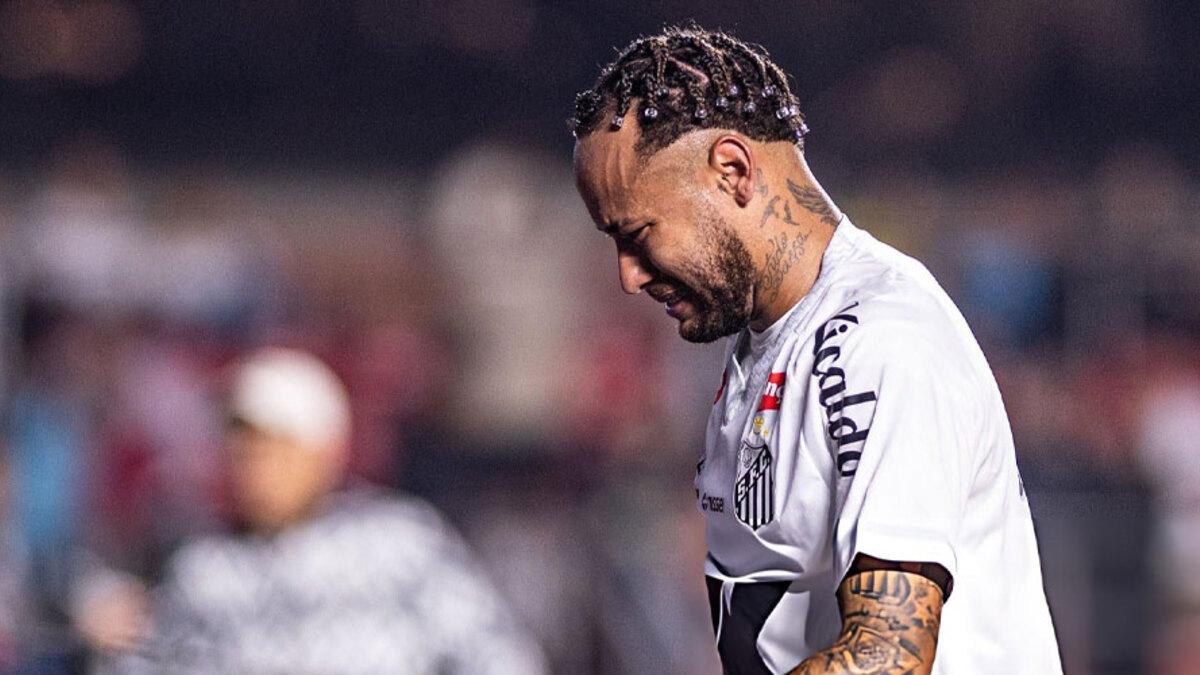
According to Brazilian outlet UOL, doctors at Santos FC had identified a calf problem that could keep Neymar sidelined for around 10 days. The report further suggested that football authorities were aware the issue was more significant than a routine knock before the squad list was finalized.
If those reports are accurate, they inevitably raise difficult questions.
Why commit a valuable World Cup squad place to a player who was not fully match-fit?
Was the decision based primarily on footballing logic, or did Neymar’s status, legacy, and influence play a role?
And perhaps most importantly, did Brazil select the idea of Neymar rather than the physical reality of the player at this stage of his career?
Those questions have fueled intense debate across Brazilian football.
For many supporters, the concern goes beyond a single injury. It stems from a pattern that has increasingly defined Neymar’s later years: periods of recovery, optimism surrounding his return, brief flashes of brilliance, and then another physical setback.
The cycle has become frustratingly familiar.
That is why some critics have pointed to Ancelotti’s own previous comments regarding Neymar’s fitness. Before announcing his squad, the veteran coach had stressed that players would only be considered if they were fully fit and capable of contributing physically at the highest level.
The emergence of injury concerns almost immediately after Neymar’s inclusion has therefore created an apparent contradiction that many fans and analysts have been quick to highlight.
Yet the debate is far from one-sided.
Supporters of the decision argue that Neymar remains a unique player within Brazilian football. Even if he is not operating at his absolute peak, there are few players in the squad capable of matching his creativity, vision, and ability to unlock tightly organized defenses.
His experience in major tournaments is another factor that cannot easily be dismissed.
World Cups are often decided by moments rather than sustained dominance, and Neymar’s supporters believe that even limited appearances could provide the type of decisive quality that wins knockout matches.
For them, the risk is worth taking.
For others, however, international football’s biggest tournament is no place for sentiment.
Their argument is simple: World Cup selections should reward form, fitness, rhythm, and reliability. Reputation alone should never guarantee a place, particularly when younger and healthier alternatives may be available.
That tension between legacy and practicality now sits at the heart of the debate.
And it is why Neymar’s every move will be scrutinized once the tournament begins.
If he arrives fit, performs well, and helps Brazil challenge for the title, Ancelotti’s faith will be celebrated as a masterstroke.
But if injuries limit his impact or force him out of key matches, critics will point back to this moment and argue that the warning signs were visible from the beginning.
For now, Brazil remains hopeful that Neymar’s latest calf problem is minor and that he will be ready when the World Cup starts.
But one thing is already certain:
What was meant to be a triumphant return has become one of the most controversial selections of the tournament before a ball has even been kicked.