The clay season is no longer quietly building toward Roland-Garros.
It has exploded into full drama.
Injuries are piling up, teenage stars are surging, veterans are fighting emotional final battles, and behind the scenes, some of tennis’ biggest names are edging toward open rebellion against the sport’s power structure.
And somehow, in the middle of all the chaos, one man continues moving through the ATP Tour with terrifying calmness:
Jannik Sinner.
Sabalenka’s Rome Collapse Sends Shockwaves Through the WTA
The biggest surprise of the Italian Open arrived when world No. 1 Aryna Sabalenka suffered a stunning defeat to veteran Romanian Sorana Cîrstea after initially appearing fully in control of the match.
But this was not simply a random upset.
After the loss, Sabalenka revealed she has been managing a lower-back issue connected to her hip — a problem that visibly affected her movement as the match progressed. Suddenly, the player who had looked nearly untouchable for much of the season now enters the most demanding stretch of the clay campaign carrying serious physical questions.
And timing could not be worse.
Roland-Garros is approaching rapidly, and movement on clay is everything. Small physical limitations quickly become major tactical vulnerabilities on the slowest surface in tennis.
For Cîrstea, however, the victory instantly became one of the defining moments of her career.
At 36 years old, and after openly suggesting that 2026 could be her final season, the Romanian produced a fearless comeback performance against the best player in the world on clay.
Emotionally, it felt like one of those rare sports moments where experience, belief, and freedom combine perfectly.
The Rome crowd sensed it too.
By the final games, every point carried the atmosphere of something historic unfolding in real time.
Jannik Sinner Is Beginning to Feel Inevitable
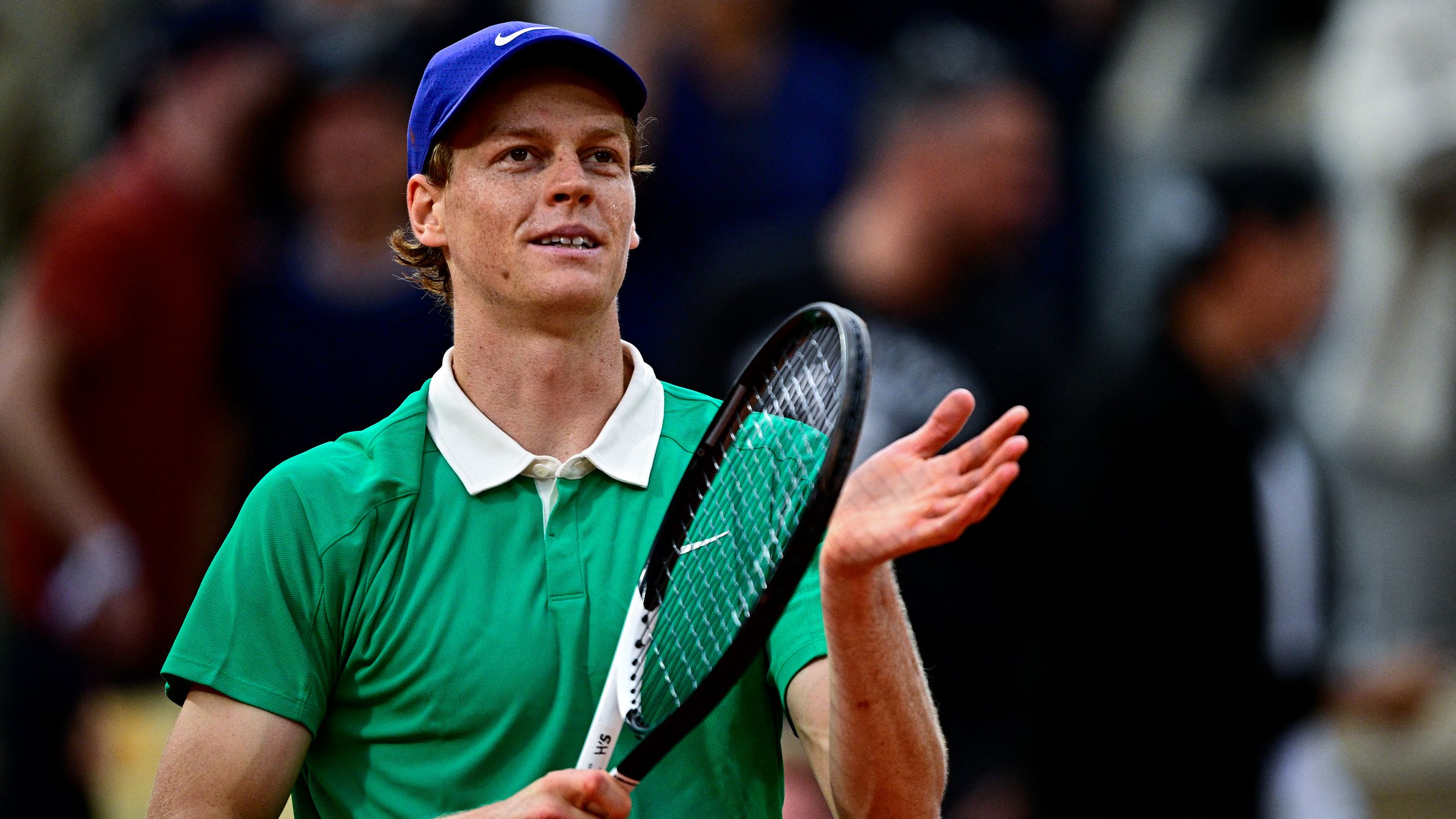
While chaos unfolds around much of the tour, Jannik Sinner continues operating with frightening efficiency.
The Italian star moved through another Rome victory with almost mechanical precision, further strengthening the growing belief that he may now be the clear favourite heading into Roland-Garros.
What makes Sinner so dangerous right now is not simply the level of tennis.
It is the emotional control.
There are almost no visible panic moments anymore.
No rushed decision-making.
No emotional collapses during difficult stretches.
Instead:
• the baseline hitting remains brutally clean,
• the movement looks effortless,
• the serving continues improving,
• and tactically he appears several steps ahead of opponents.
The transformation from elite talent into dominant force now feels complete.
Italian tennis fans have fully embraced the moment as well. Every Sinner appearance in Rome currently feels less like a tennis match and more like a national event.
And perhaps most intimidating for the rest of the ATP Tour is this:
Sinner does not look satisfied yet.
Tennis’ Biggest Stars Are Now Openly Fighting the System
Away from the court, tensions inside professional tennis are reaching levels the sport has not seen in years.
Several major stars — including Novak Djokovic, Jannik Sinner, Aryna Sabalenka and Coco Gauff — have publicly criticized the current Grand Slam prize money structure, arguing that players are receiving an unfairly small share of the sport’s enormous revenues.
What once sounded like quiet locker-room frustration has evolved into something much more serious.
There are now genuine discussions surrounding:
• revenue redistribution,
• player welfare,
• scheduling reform,
• and even the possibility of collective action if meaningful changes are not made.
The involvement of the Professional Tennis Players Association has only intensified the situation.
This is no longer simply about prize money.
It is becoming a battle over power inside modern tennis.
And with the sport entering one of its most commercially successful eras globally, players increasingly believe they deserve a far larger seat at the table.
Naomi Osaka Is Quietly Rebuilding Momentum
One of the more intriguing developments of the clay season has been the gradual resurgence of Naomi Osaka.
Historically, clay has never been considered her strongest surface. But recent performances suggest she is beginning to rediscover rhythm, confidence, and movement consistency at exactly the right time.
The serving looks sharper.
The defensive balance is improving.
And emotionally, she appears far more settled.
That combination makes Osaka one of the most dangerous unseeded threats heading toward Paris.
Because when fully confident, few players in women’s tennis can generate offensive pressure as explosively as she can.
Tennis’ Next Generation Is Arriving Fast
Another major storyline developing across both tours is the speed of the sport’s generational transition.
Young talents are no longer merely promising prospects.
They are already influencing major tournaments.
Names like:
• Mirra Andreeva,
• Arthur Fils,
• Rafael Jodar,
• and Victoria Mboko
are rapidly becoming central figures in tennis conversations worldwide.
Andreeva’s rise in particular continues to stun observers. Her maturity, tactical intelligence, and composure at such a young age have already placed her among the sport’s most exciting emerging stars.
Meanwhile, French hopes surrounding Arthur Fils are intensifying ahead of Roland-Garros, where home crowds are desperate for a new national star to rally behind.
The message from the younger generation is becoming increasingly clear:
The future is arriving earlier than expected.
Roland-Garros May Carry Emotional Final Goodbyes
Alongside the rise of youth comes the emotional reality that several beloved veterans may be approaching their final appearances in Paris.
For players like:
• Stan Wawrinka,
• Gael Monfils,
• and David Goffin,
this year’s Roland-Garros could carry enormous emotional weight.
These players belong to one of the richest generations tennis has ever produced — an era defined by extraordinary personalities, legendary rivalries, and historic longevity.
Fans understand what may be coming.
And before the French Open has even officially begun, the atmosphere around Paris is already carrying a sense of transition.
The Clay Season Is Delivering Absolute Chaos
Rome has already produced:
• major upsets,
• injury scares,
• breakthrough performances,
• political tension,
• and growing psychological warfare ahead of the French Open.
And the most dangerous part?
The biggest tournament of the clay season has not even started yet.
Roland-Garros is approaching with uncertainty everywhere:
the women’s draw suddenly looks vulnerable,
the men’s tour may have a new dominant force,
and tennis itself is entering one of its most politically volatile moments in years.
Which means one thing is becoming increasingly obvious:
Paris is going to be absolute chaos.