Allyson Felix Targets One Final Olympic Moment
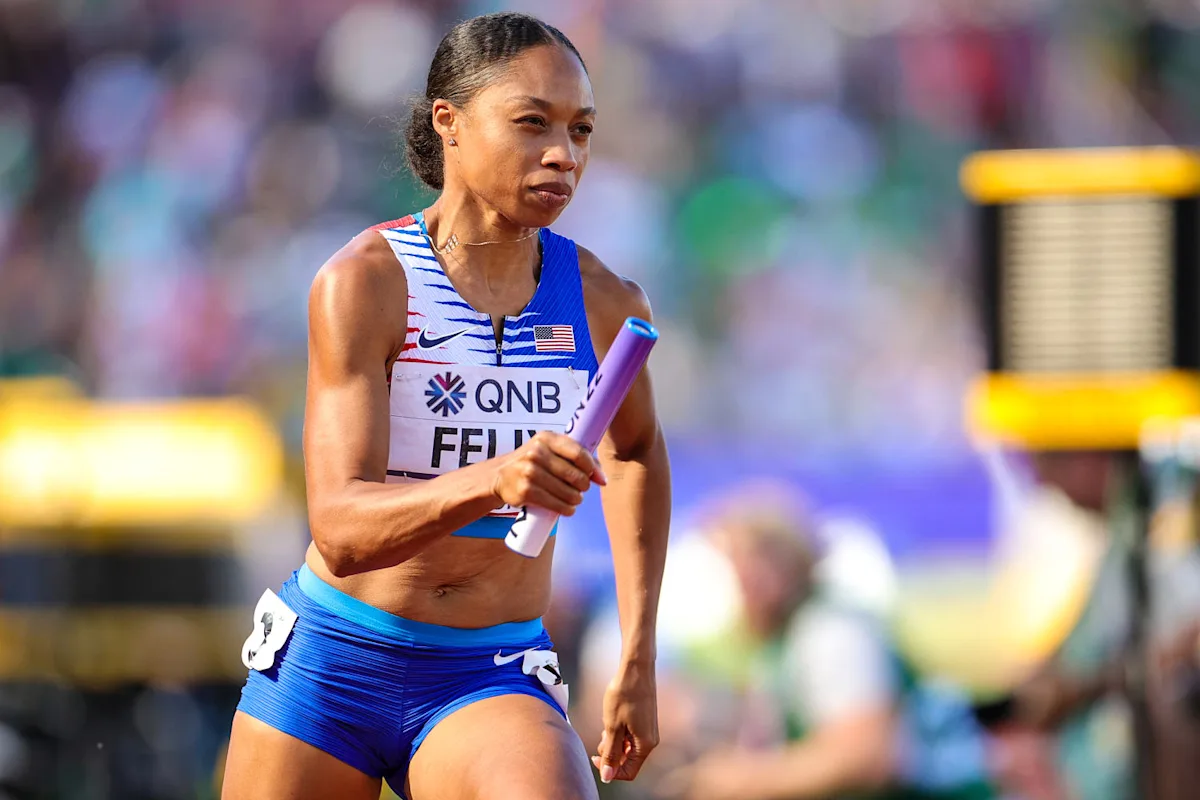
Allyson Felix could be preparing one of the most emotional comeback stories in modern athletics.
Reports suggest the seven-time Olympic gold medalist is exploring a return for the mixed relay event at the 2028 Summer Olympics potentially competing at 40 years old in front of a home crowd in Los Angeles.
The storyline alone feels cinematic:
- A home Olympics
- America’s most decorated female track athlete
- One final relay appearance on the sport’s biggest stage
Felix has reportedly made it clear that the motivation is no longer about proving greatness. Instead, the comeback would be about challenging herself again and embracing one last Olympic experience.
The growing importance of mixed relay events could make that possibility far more realistic than many initially imagined.
Sprinting Is Entering A New Generation Of Superstars
Track and field is also witnessing the rapid rise of a frighteningly talented new sprint generation.
Young stars such as:
- Quincy Wilson
- Letsile Tebogo
- Erriyon Knighton
are already reshaping global sprint conversations.
Among them, Tebogo’s rise feels especially important for the sport. Beyond the performances, the Botswana star brings charisma, confidence, and personality qualities athletics has struggled to consistently market since the era of Usain Bolt.
As rivalries continue building toward future global championships and the next Olympics, sprinting appears ready for another major global boom period.
Marathon Running Is Reaching Unreal Levels
Distance running is also pushing the limits of what once seemed humanly possible.
Recent marathon performances have intensified debates around the evolution of endurance athletics, particularly after breakthrough performances from athletes like Sabastian Sawe and Tigst Assefa.
Modern marathon times are increasingly being shaped by:
- Advanced recovery science
- Carbon-plated shoe technology
- Sophisticated pacing systems
- Elite nutrition and performance analytics
The result is a version of marathon running that looks dramatically different from even a decade ago.
For many fans and analysts, the current era feels less like incremental progress and more like a complete redefinition of endurance performance.
World Athletics Continues Taking A Hard Political Stance
Away from the track, World Athletics remains firm on one of sport’s most politically sensitive issues.
Under the leadership of Sebastian Coe, the governing body has resisted pressure to fully restore participation rights for Belarusian athletes despite wider discussions involving the IOC.
The situation continues fueling debate across global sport:
- Should athletics remain politically neutral?
- Or does the sport carry broader social and geopolitical responsibilities?
The conversation surrounding athlete eligibility and international participation remains far from settled heading into future championships.
Athletics Is Reinventing Its Future
Perhaps the biggest development of all is the sport’s ongoing attempt to modernize itself.
World Athletics is aggressively reshaping track and field through:
- Larger prize pools
- Faster event formats
- Entertainment-driven presentation
- Star-focused marketing strategies
The upcoming World Athletics Ultimate Championship represents a major part of that strategy, aiming to deliver condensed elite competition with greater global entertainment appeal.
The message is clear:
Athletics no longer wants to rely solely on nostalgia from the Bolt era.
It is trying to build a new identity for a new generation.